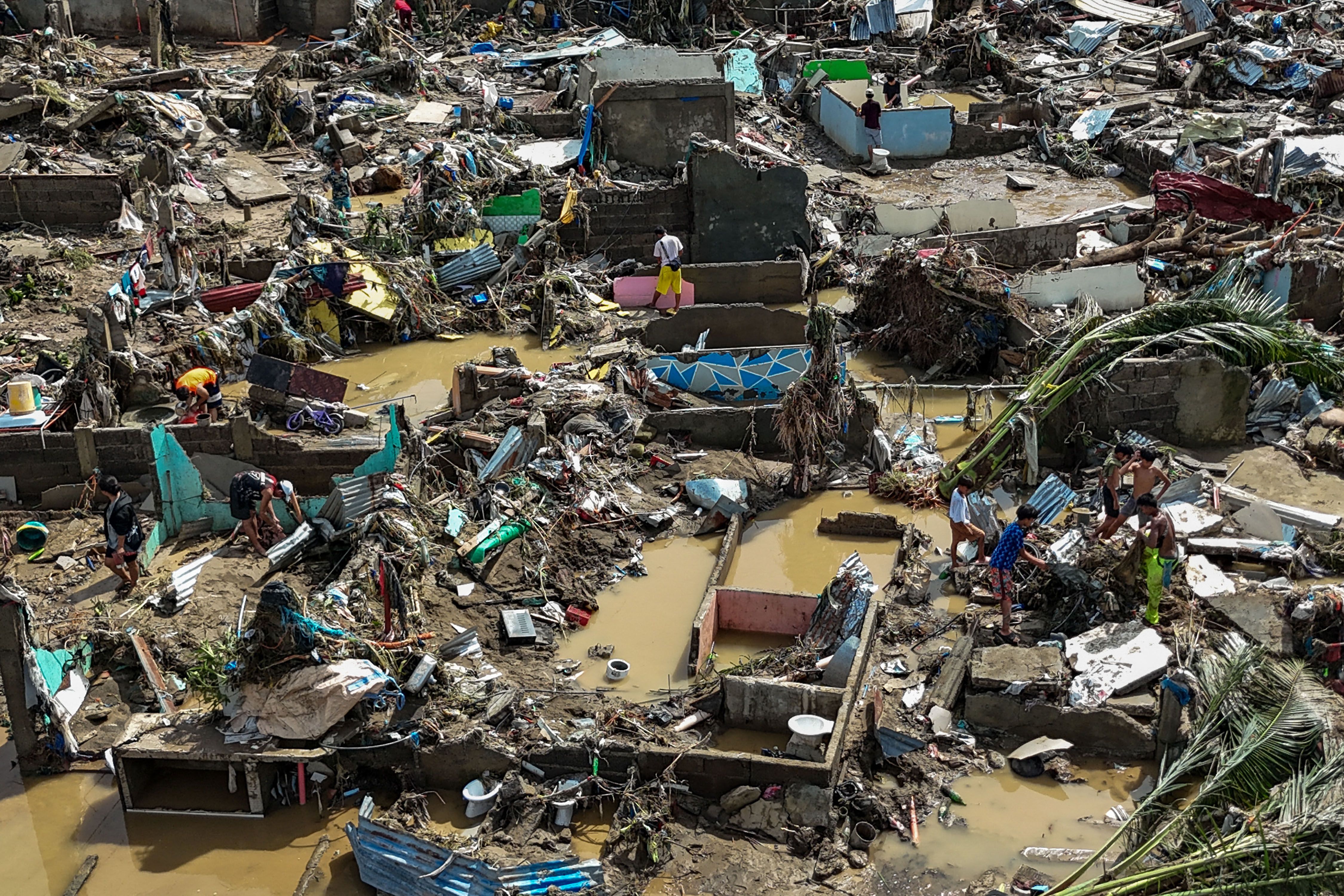
 This aerial photo shows damaged houses in the aftermath of Typhoon Kalmaegi in Talisay, in Cebu province on November 5, 2025. The death toll from Typhoon Kalmaegi in the Philippines climbed to 66 on November 5, as residents of hardest-hit Cebu province began picking through homes and businesses devastated by the worst flooding in recent memory. Jam Sta. Rosa, AFP
MANILA — The death toll from Typhoon Tino in the Philippines climbed past 90 on Wednesday as the devastating impact on hard-hit Cebu province became clearer after the worst flooding in recent memory.
Floodwaters described as unprecedented had rushed through the province's towns and cities a day earlier, sweeping away cars, riverside shanties and even massive shipping containers.
On Wednesday, Cebu spokesman Rhon Ramos told AFP that 35 bodies had been recovered from flooded areas of Liloan, a town that is part of provincial capital Cebu City's metro area.
The grim news brought the toll for Cebu to 76. Earlier in the day, national civil defense deputy administrator Rafaelito Alejandro confirmed at least 17 deaths in other provinces.
"It was the major cities that got hit (with floods), highly urbanised areas," Alejandro said in an interview with local radio, adding that 26 people remained missing.
AFP reporters on Wednesday morning spoke with residents as they cleaned up streets that a day before had been rivers.
"The flood here yesterday was really severe," Reynaldo Vergara, 53, told AFP, adding that everything in his small shop had been washed away.
"The river overflowed. That's where the water came from," he said.
"Around four or five in the morning, the water was so strong that you couldn’t even step outside ... nothing like this has ever happened. The water was raging."
Cabadiangan, Compostela resident Amy Bobo said she was swept by flood waters with her family, forcing them to hold onto drift wood. She said her 5-year-old son lost his grip which led to his drowning.
“When my father tried to resurface and climbed to a banana tree, my son was left below. We were not able to get him,” she said.
In the 24 hours before Tino's landfall, the area around Cebu City was deluged with 183 millimetres (seven inches) of rain, well over its 131-millimetre monthly average, weather specialist Charmagne Varilla told AFP.
On Tuesday, provincial governor Pamela Baricuatro called the situation "unprecedented".
"We were expecting the winds to be the dangerous part, but... the water is what's truly putting our people at risk," she told reporters. "The floodwaters are just devastating."
Scientists warn that storms are becoming more powerful due to human-driven climate change. Warmer oceans allow typhoons to strengthen rapidly, and a warmer atmosphere holds more moisture, meaning heavier rainfall.
In total, nearly 400,000 people were pre-emptively moved from the typhoon's path.
Tino slightly intensifies while moving away from Palawan
Liloan resident Angelia Brigoli has set up a makeshift tent with her neighbors after their homes in Barangay Cotcot were totally washed out.
A few of them returned to their muddy homes to retrieve whatever was left. Among them was Pigelyn Hitutua who went back for her children’s important documents.
“We only brought clothes, the ones that we were wearing,” she said.
MILITARY HELICOPTER CRASH
The Philippine military confirmed on Tuesday that a helicopter, one of four deployed to assist typhoon relief efforts, had crashed on northern Mindanao island.
The Super Huey helicopter went down while en route to the coastal city of Butuan "in support of relief operations" related to the powerful storm, Eastern Mindanao Command said in a statement.
Hours later, air force spokeswoman Colonel Maria Christina Basco said the remains of six people had been recovered by troops.
"We're waiting to confirm the identities via forensics in order to ascertain their identities," she told reporters, saying two pilots and four crew members were on board.
Air Force probing all angles in chopper crash
As of 11:00 am Wednesday, Tino was moving westwards towards the tourist hotspots of Palawan, with winds of 130 kilometers per hour and gusts of 180 kph.
The Philippines is hit by an average of 20 storms and typhoons each year, routinely striking disaster-prone areas where millions live in poverty.
With Tino, the archipelagic country has already reached that average, weather specialist Varilla told AFP, adding at least "three to five more" storms could be expected by December's end.
The Philippines was hit by two major storms in September, including super typhoon Nando, which tore the roofs off buildings on its way to killing 14 people in nearby Taiwan.
Potential super typhoon may make landfall at or near peak intensity – PAGASA