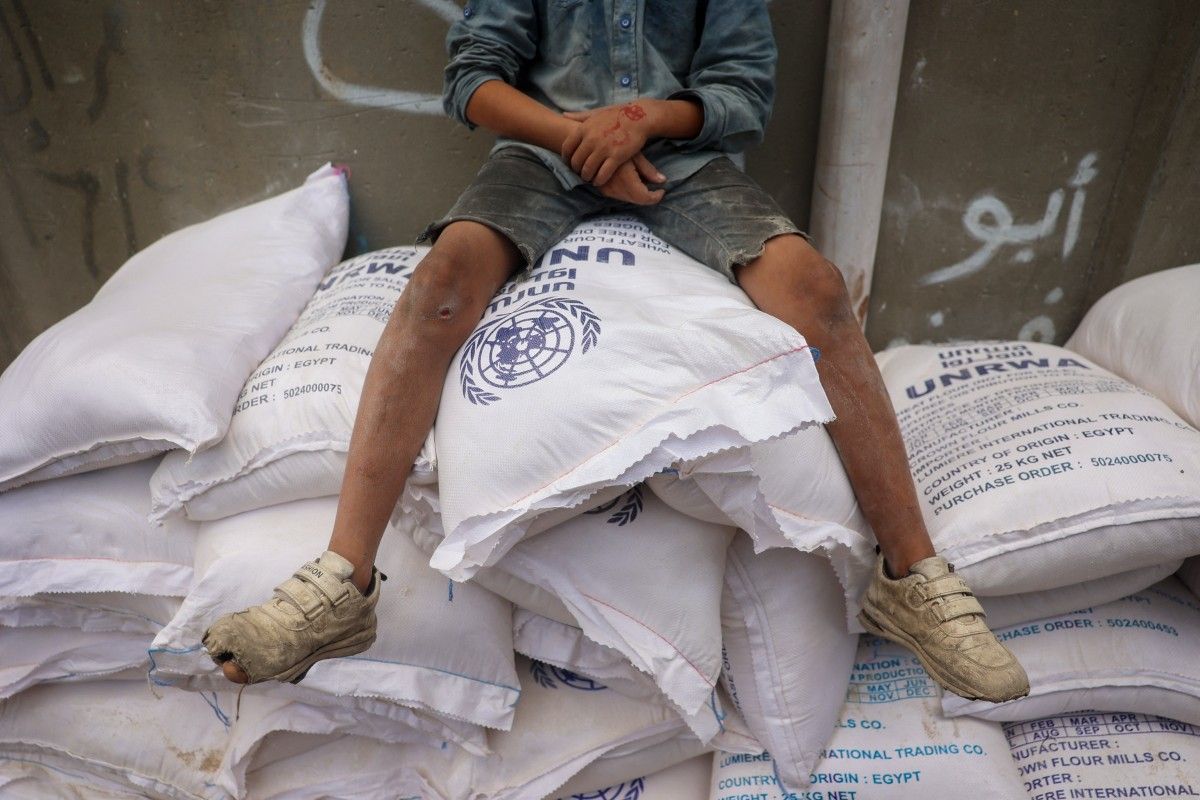
 A Palestinian child sits on top of sacks of flour at a United Nations Relief and Works Agency (UNRWA) aid distribution centre in Deir el-Balah in the central Gaza Strip on November 3, 2024, amid the ongoing war between Israel and the Palestinian militant group Hamas. Eyad Baba, AFP/File
UNITED NATIONS, United States — Cuts in international aid could bring an end to decades of progress in fighting child mortality, and even reverse the trend, the United Nations warned Monday.
WHO chief warns US aid cuts could cost millions of lives
Although the annual report from UNICEF, the World Health Organization and the World Bank does not single out the United States, it comes as President Donald Trump's administration has axed the vast majority of the programs carried out by USAID, America's main overseas aid agency with a former annual budget of $42.8 billion.
"The global health community cannot be worried enough at the situation that we are seeing," Fouzia Shafique, UNICEF's Associate Director of Health, told AFP.
The report warns the consequences of aid money cuts will be the worst in countries where infant mortality rates are already the highest, such as in sub-Saharan Africa and southern Asia.
Vaccine hesitancy main challenge in increasing fully-immunized children: DOH
"Simply put, if support for life-saving services is not sustained, many countries can expect a resurgence of newborn and child deaths," the report said.
In 2023, mortality of children under age five continued to drop, with 4.8 million deaths recorded, including 2.3 million newborn babies under a month old, according to the report.
The number of such deaths fell below five million for the first time in 2022, and the new record low marks a 52 percent decline since 2000.
UN alarmed as childhood immunization levels stall
But Shafique insisted that "4.8 million is 4.8 million too many."
Since 2015, progress in fighting child mortality has slowed as aid money was redirected towards fighting Covid -- and this could be just the start of a dangerous pattern.
"Bringing preventable child deaths to a record low is a remarkable achievement. But without the right policy choices and adequate investment, we risk reversing these hard-earned gains," UNICEF executive director Catherine Russell said in a statement.
"We cannot allow that to happen," she added.
1.9 MILLION STILLBORN BABIES
Some negative impacts of the funding cuts are being felt already, such as health care worker shortages, clinic closures, vaccination program disruptions, and a lack of essential supplies, such as malaria treatments.
Terminated USAID employees applauded as they vacate offices in wake of Trump's cuts to foreign aid
Ethiopia, for instance, is enduring a big increase in malaria cases, said Shafique.
But the country is facing an acute shortage of diagnostic tests, insecticide-treated nets for beds and funding for spraying campaigns against disease-carrying mosquitos.
A separate report by the same organizations found a stubbornly high number of stillbirths -- babies who die after 28 weeks of pregnancy, before or during childbirth -- with a total of around 1.9 million such deaths in 2023.
Malnutrition still prevalent in PH: study
"Every day, more than 5,000 women around the world endure the heartbreaking experience of stillbirth," the second report states.
With proper care during pregnancy and childbirth, many of these deaths could be averted, as could the premature births of fragile babies.
US cuts ODA budgets by more than 90 percent: State Dept
And deaths of small children could also be largely avoided by fighting preventable diseases such as pneumonia and diarrhea.
"From tackling malaria to preventing stillbirths and ensuring evidence-based care for the tiniest babies, we can make a difference for millions of families," said Dr Tedros Adhanom Ghebreyesus, Director-General of the World Health Organization.
— By Amélie Bottollier-Depois, Agence France-Presse
RELATED VIDEO